
Pér’s launch, and the next chapter of Amperity
Ten years ago, Derek and I started Amperity with a simple belief: when brands understand their customers, they can put their best ideas to work and create better experiences.
That belief brought us to October 8, when we introduced Pér, Amperity’s AI agent for customer decisions, and celebrated with our customers, partners, and team in New York.
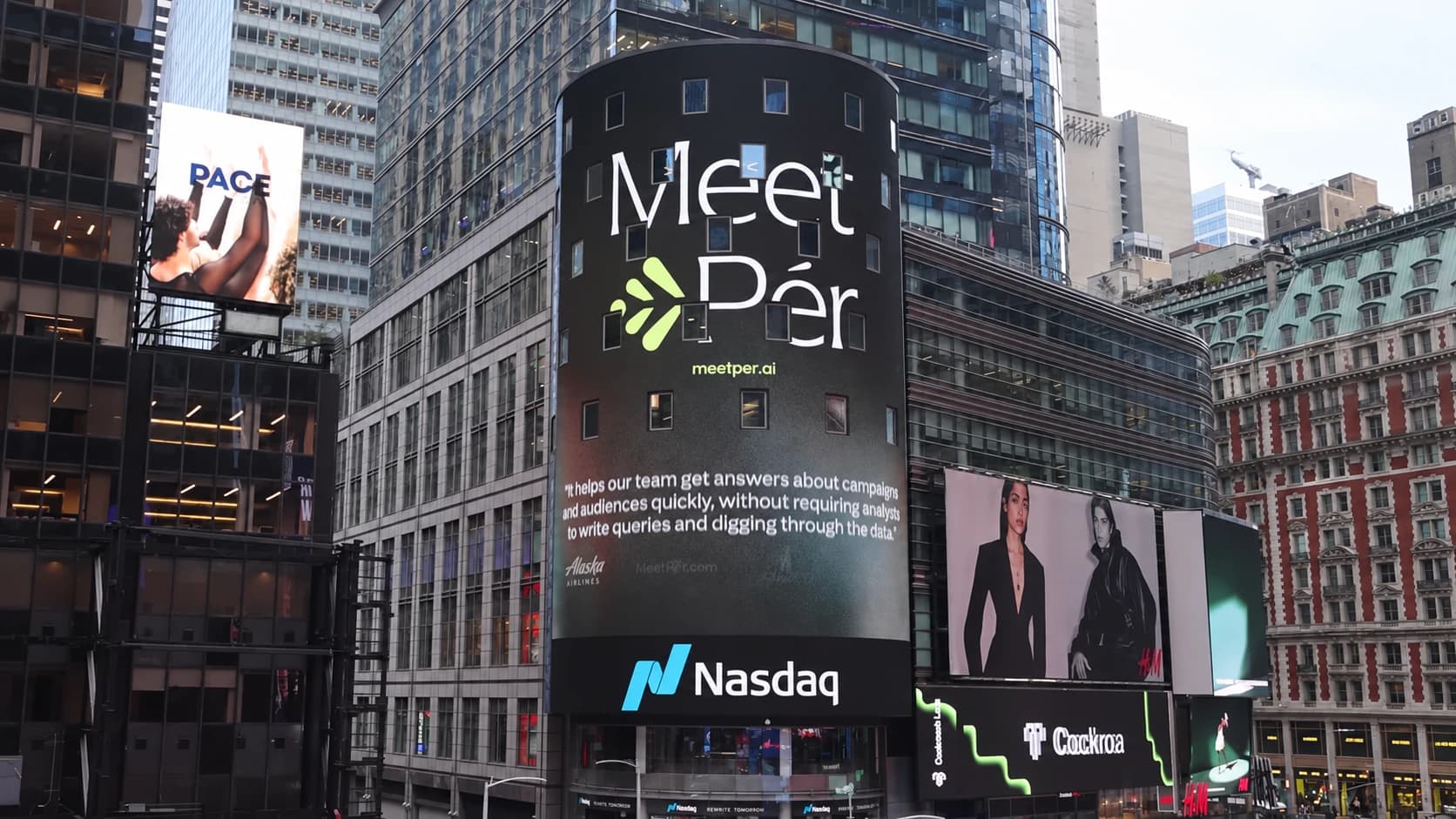
Seeing Pér on the Nasdaq screen in Times Square was a moment I’ll always remember. Years of work, relationships, and conviction, were brought into view in one of the world’s most recognizable places.
Later that evening, our customers took the stage. They shared what they had already been doing with Pér: investigating a business problem, finding a relevant audience, getting through work that would otherwise consume a small team’s day.
Their stories gave the launch its meaning.
For me, this marks a refounding of Amperity around the next part of the promise we started with. Understanding customers has always mattered because of what it enables people to do.
The distance between knowing and doing
Every business knows this pattern. Someone asks why a group of customers is slipping away. The question becomes a ticket. The ticket becomes a query. The query becomes a meeting, followed by more questions and more work.
Meanwhile, the customer keeps moving.
Our customers have no shortage of ideas or ambition. What gets in their way is the time and effort required to turn customer understanding into a decision, and then into action.
AI is changing that. But the customer context underneath it has to be trustworthy. A confident recommendation built on fragmented data can send a team in the wrong direction faster.
That is why the foundation we have built at Amperity matters so much to this next chapter. Pér brings trusted customer context into the work of understanding an opportunity, examining the evidence, and deciding what to do next.
People remain accountable. They can question the recommendation, refine it, and approve the next step before it moves into an enabled workflow.
That principle came through clearly in the stories our customers shared.
What our customers made possible
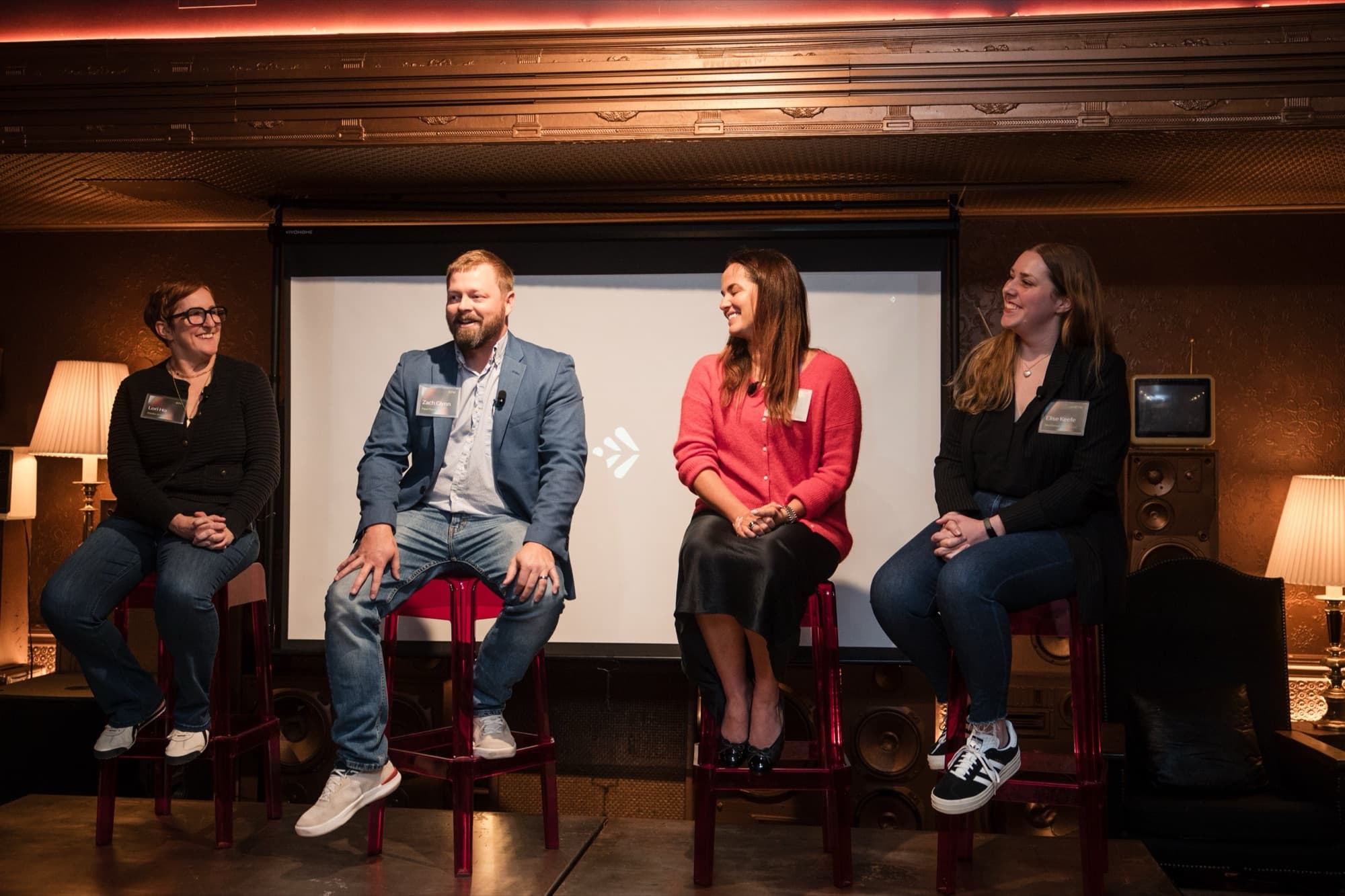
Marika Bigler from Catalyst Brands described getting an urgent question from a brand CEO about Lucky’s performance. She used Pér to investigate the customer and product patterns, then worked through ideas for what to do next. Her team turned that thinking into an additional email with a relevant audience.
As Marika put it:
“In retail, you have to work at the speed of retail, and this is the first time I feel like I’ve been able to do that in a really graceful way.”
That is a meaningful change in how work happens. A business question arrived, and she had a way to investigate it while there was still time to respond.
Lori Ho from Alaska Airlines shared how her team used Pér to explore which travelers were most likely to respond to offers for Hawaii. The test gave them evidence they could use to inform future segmentation.
“For us, it’s a game changer in how we segment our messages to people.”
The opportunity starts with understanding the person receiving the message: their history, their interests, and what might be relevant to them now.
Zach Glynn from Fleet Farm spoke about the work between an audience insight and its execution. For a small team, a request involving customer lists across 50 stores could become a substantial project. He described using Pér to produce the formatted data and a query the team could reuse.
“A simple prompt not only brought the table of data exactly how we wanted it formatted, but also gave us the query to use in the future and to launch and execute on immediately.”
Those practical details matter. They show where time goes today, and where teams can get it back.
Elise Keefe from MacKenzie-Childs shared how she explored post-purchase survey responses to better understand gifting behavior. That investigation led to customer insights and a proposed journey she could evaluate.
Her description captured something essential about the relationship between Pér and the person using it:
“It gave me this recommendation, and now I have the opportunity to evaluate it, pick it apart, and figure out what we actually need to do, instead of having to start from ground zero.”
That is the kind of capability we want to put in people’s hands: a stronger starting point, evidence they can examine, and room to apply their judgment.
Built with people willing to try
To Alaska Airlines, Fleet Farm, Catalyst Brands, and MacKenzie-Childs: thank you for helping shape Pér, putting it to work, and sharing your experiences so openly.
And to Lori, Zach, Marika, and Elise personally, thank you for your time, your candor, and your willingness to try something new. Bringing an emerging product into your daily work takes curiosity and conviction. Your feedback helps us build, and your ingenuity shows us what is possible.
Thank you to our customers and partners who celebrated with us, whether you joined in person or supported us from afar. Thank you to Nasdaq for helping us mark the moment in Times Square. And thank you to the Amperity team, whose work and belief made this launch possible.
I left the evening thinking about the people behind these stories. People with ambitious ideas, real responsibilities, and customers they want to serve better.
Giving them more capacity to do that work is why we built Pér.
October 8 was a celebration of how far we have come. It also set the direction for what we build next: helping teams turn trusted customer understanding into better decisions and approved action, while the opportunity is still there.